The Blackwater Codex
People, places, promises—and the evidence left behind when someone tried to turn them into a debt.
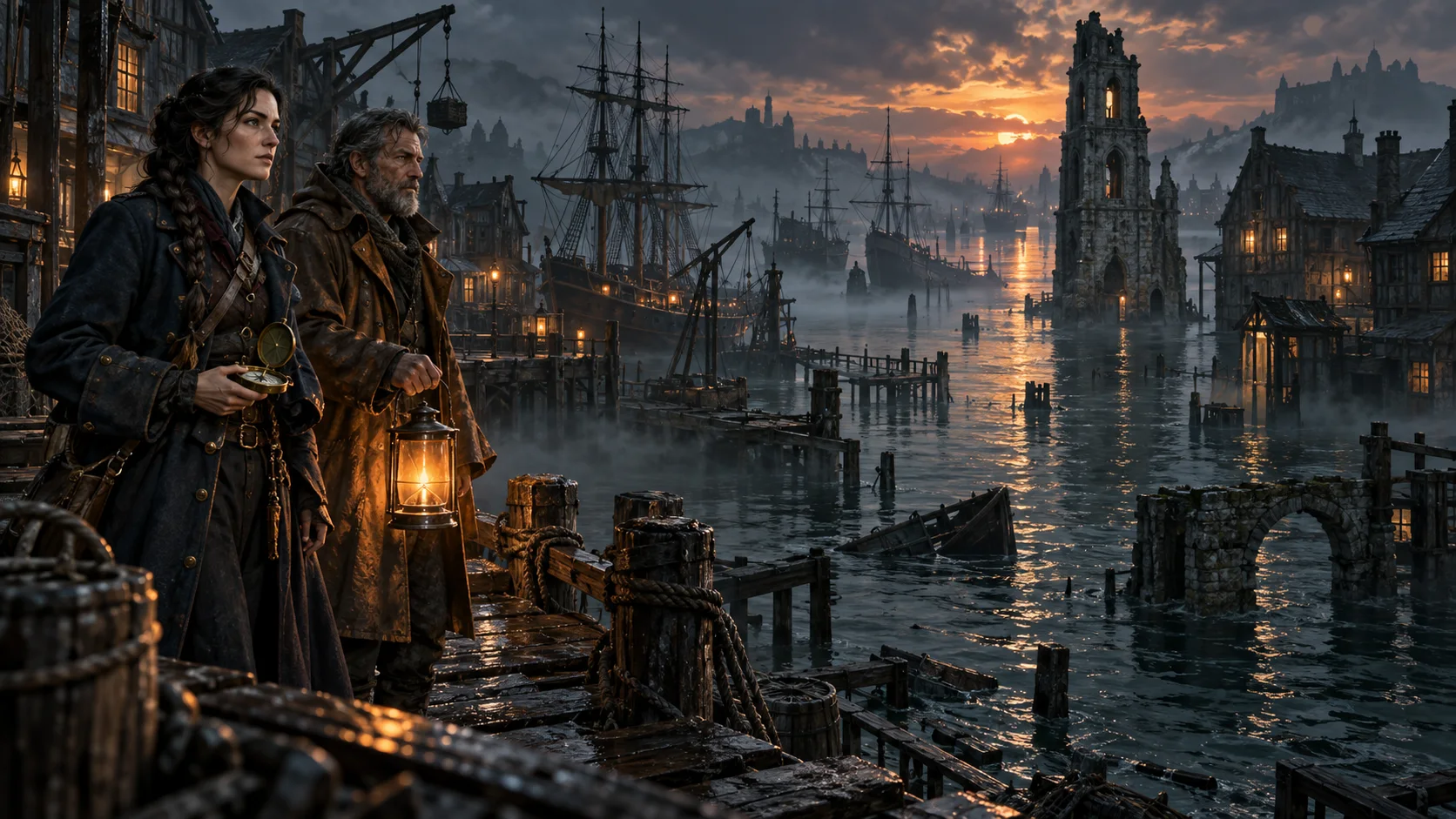
Blackwater, the city between banks
A crossing became a city; a promise became its most dangerous inheritance.
Before banners divided the banks, Blackwater was a place where ferries waited for the last passenger. Its river rose too quickly for permanent bridges, and every household kept a lantern ready for strangers caught after sunset. Shelter was not an act of charity. Anyone might need it tomorrow. The crossing houses kept names so that a delayed traveler would be searched for, not presumed lost.
The city grew around those records. Counting houses became councils, emergency stores became taxes, and the keepers of the lamps became officers. Much of that order saved lives. The harm began when an institution treated a name as something it owned rather than something it had agreed to protect. The two parties in the comics approach the same battlefield through different parts of this history.
Related records
The shared chronology
Before the banners
Ferry households establish voluntary offerings and two-witness safeguards.
The siege winters
Communal forges shelter displaced households; the two coalitions harden into military institutions.
The copied covenant
Local amendments remove refusal. Forged seals spread coercive orders through legitimate offices.
The first comic pair
Urak and Avel’s parties find complementary evidence and approach Blackwater. A tower archer shoots the white flag.
Parallel side stories
Names Beneath the Water and Emberwake confront local covenant abuses without resolving the comic cliffhanger.
Relics in the game
447 named equipment entries and 17 equipment sets connect the expedition to its makers and witnesses.
Browse origins, stats and acquisitionThe comic’s first pair ends at the falling flag. The campaign and Emberwake are parallel side stories; their local victories do not reveal an unpublished resolution to the beacon mystery.